Foster Love.
Foster Healing.
Keep Alaska’s Youth in Alaskan Homes
Right now, hundreds of youth in the Anchorage Municipality and Mat-Su Borough need homes where they can feel safe, supported and loved. For those requiring the highest levels of care, the answer is therapeutic foster care.
In 2025, nearly 200 youths statewide were referred to a therapeutic foster care home. Without enough available homes some of these youth were institutionalized or sent out of state for treatment.
Expanding therapeutic foster care within Alaska helps keep foster youth closer to their communities and support networks. Community resources like AK Child & Family and Denali Family Services are here for those interested in becoming therapeutic foster parents.
You don’t have to have all the answers. With training, support, and the right match, you can help a young person find stability and healing.
Foster With Us.
Interested in learning more about therapeutic foster care? Fill out the form below and one of our trained team members will reach out to answer your questions, walk you through the process, and help you explore whether this opportunity could be a good fit for you and your family.
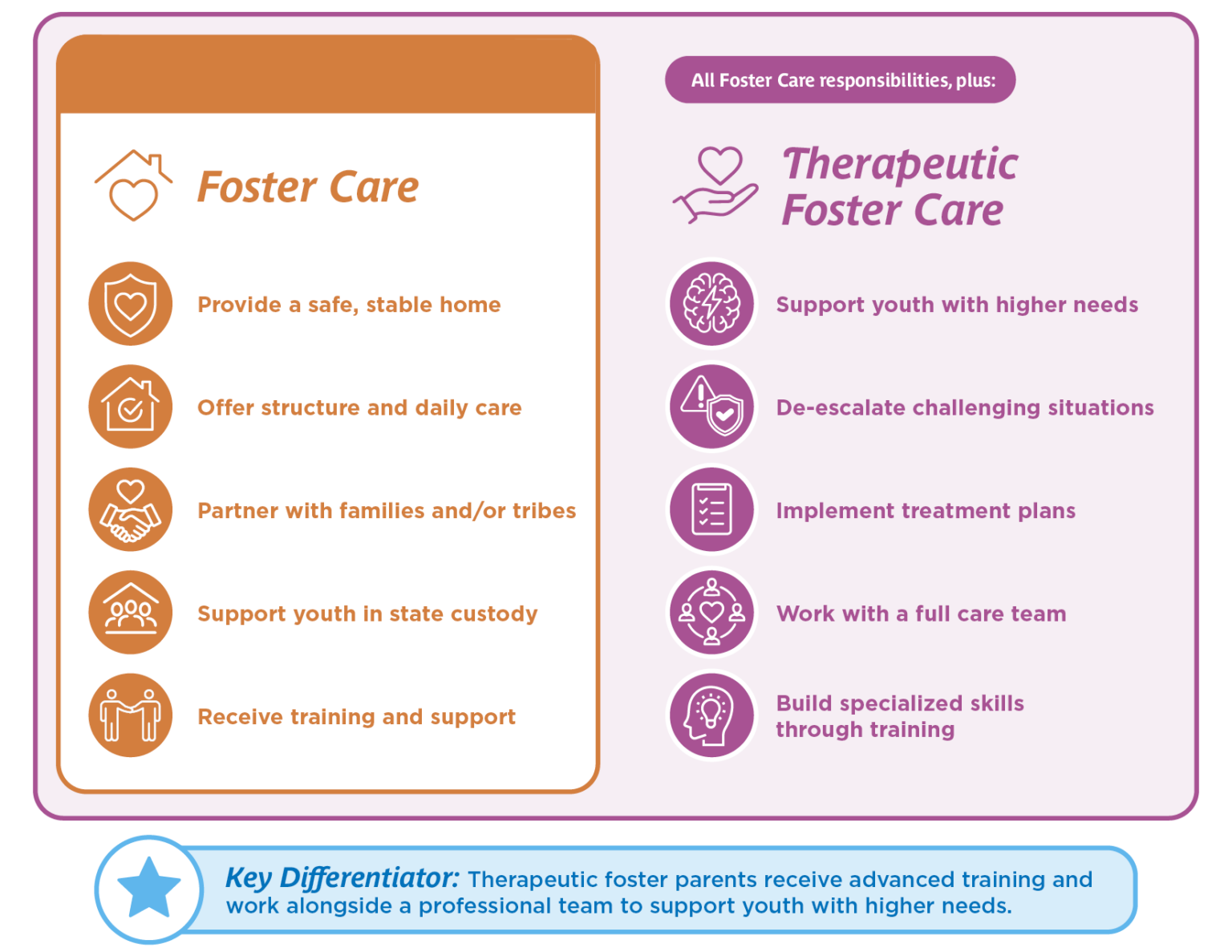
Traditional vs. Therapeutic
Therapeutic foster care builds on the foundation of traditional foster care with additional training, support, and services for youth with higher needs. This comparison helps illustrate how therapeutic foster care is designed to support both youth with higher needs and the families who care for them.
Your Journey
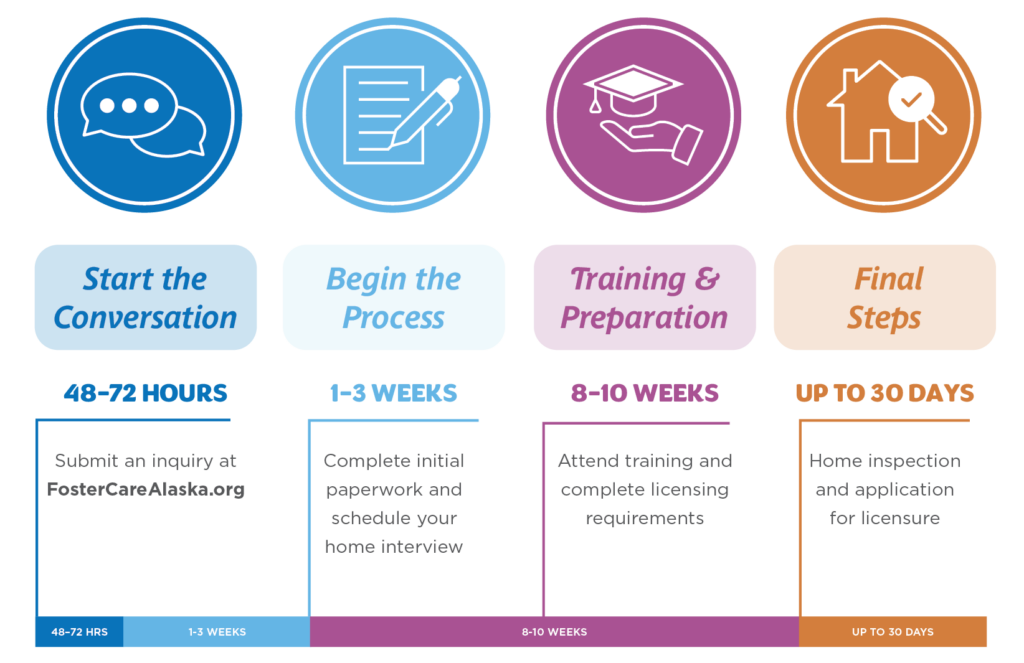
Getting started with therapeutic foster care does not happen all at once. This simple step-by-step process shows what to expect and how we help you through each stage.
Benefits
Becoming a therapeutic foster parent offers many benefits, both for the foster child and the foster parent. Therapeutic foster care is a more specialized form of fostering, where parents are trained to care for children with emotional, behavioral, or mental health challenges.
Therapeutic foster parents help youth who have experienced significant trauma or who have special emotional needs. By providing a stable, supportive environment, you can make a transformative difference in the youth’s life, giving them the tools to heal and thrive.
Therapeutic foster parents receive advanced training in behavioral management, trauma-informed care, and other strategies to support youth with complex needs. This training enhances your skills in caregiving, conflict resolution, and therapeutic techniques.
In therapeutic foster care, you’ll work alongside a team of professionals, including therapists, case managers, and social workers. This network provides guidance and support, improved communication with your professional support team, and ensures you’re not alone in managing challenging situations.
Therapeutic foster parents also receive higher financial compensation compared to traditional foster care. This compensation helps cover the additional time, effort, and resources required to care for children with special needs.
You’ll gain access to therapeutic services for youth, including school-break programs, after school programs, family therapy, etc.
Knowing that you’ve provided a safe, loving, and structured environment for youth to heal from trauma can be incredibly rewarding. The emotional bonds formed through the process are often deep and meaningful, giving foster parents a sense of fulfillment and purpose.
Therapeutic foster care enhances problem-solving skills, patience, empathy, and crisis management. These skills are not only useful in the caregiving role but can also translate into other areas of life, including personal relationships and professional development.
If you have youth of your own, therapeutic foster care can teach them valuable life lessons about empathy, compassion, and resilience. It provides a chance for your family to bond through service and kindness.
For some foster families, therapeutic foster care may lead to adoption, offering a permanent home to youth in need. Though not the goal of every foster care placement, it can be a meaningful path for families interested in adopting.
Working through challenges with foster youth can lead to significant personal growth. It requires patience, creativity, and perseverance, which can build your emotional resilience and adaptability.
As a therapeutic foster parent, you are directly contributing to your community by providing a necessary service for youth who need stability and care. This role can strengthen community ties and foster a sense of belonging.
Testimonials
Foster Care Awareness Month Logos & Brand Resources
Looking to share Foster Care Awareness Month messaging? Use these downloadable logos and brand guidelines to help promote Foster Care Awareness Month and support therapeutic foster care awareness efforts.
This initiative is supported by